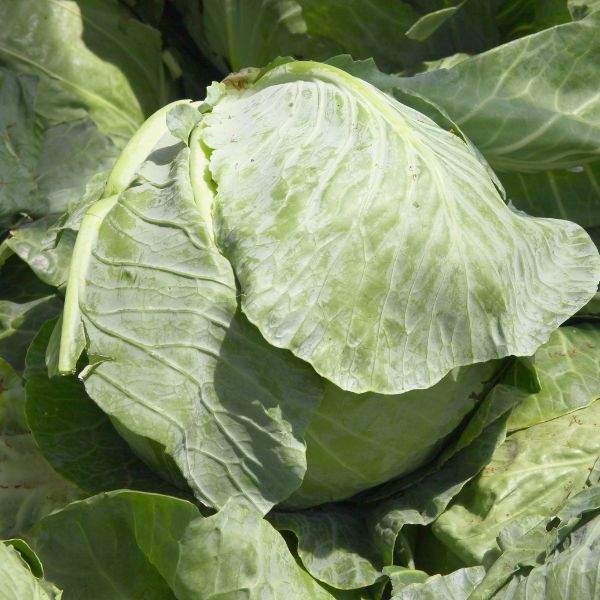
Product images shown online are intended to represent the mature, finished plant, including its expected color, growth habit, and overall appearance. They are not intended to depict the size or fullness of the starter plug at the time of shipment.
Tray Size
Sold in Liners of 100
Price Per Plug:
29.1 ¢
Total Per Tray:
$29.10
Partial Tray
Price Per Plug:
48.1 ¢
Split Tray of 35 - Total:
$16.84
Sold in Liners of 280
Price Per Plug:
24.1 ¢
Total Per Tray:
$67.48
VEGCEFD105Preorder for your desired ship date! North Carolina Farms, Inc.
Early Flat Dutch is a popular variety that offers an early maturing time and distinctive flat heads. Edible leaves and stems grow in compact, uniform heads ideal for use in slaws and stews. Gardeners who want to start the season as soon as possible will love this early-planting cabbage. Early Flat Dutch withstands cool temperatures and hot summers and is well-suited to colder regions. Dense, crisp leaves on flat heads are easier to work with than round varieties and grow 6-10 pounds and 6-8" in diameter on plants 12-24" tall and wide. Our seedlings ensure a healthy start for your crops and arrive ready to transplant into your final containers. This heirloom cabbage stores well and makes excellent sauerkraut. Offer Early Flat Dutch alongside complementary Cabbage varieties such as Charmant and Red Acre.
Early Flat Dutch Selling Tips
Early Flat Dutch is the ideal solution for commercial greenhouses looking to offer a unique and high-quality cabbage for retail customers to grow in their vegetable gardens. This versatile cultivar of the wild cabbage plant is known for its firm, compact head, making it perfect for head lettuce and cabbage production. With its ability to resist heat damage and flourish in many conditions, Cabbage is a low-maintenance and reliable choice for home gardeners. The seedling plug provides a head start with established roots, reducing the time to transplant and increasing the likelihood of successful growth. Retail customers can enjoy the delicious, healthy leaves and stems of Early Flat Dutch in their gardens all year round, with the satisfaction of growing a superior product at a fraction of grocery store cost. By offering this plant, commercial greenhouses can provide a unique and sought-after option for their retail customers.
Coach Your Customer
Grow Cabbage in the vegetable garden, a patio container, or a raised bed. Improve productivity, flavor, and health by growing this plant alongside Rosemary, Thyme, Sage, Onions, Beets, Lettuce, Radishes, Carrots, and Nasturtiums. Grow related plants like tomatoes, strawberries, broccoli, cauliflower, peppers, pole beans, and brussels sprouts farther away from Cabbage to help prevent the spread of pests and diseases and keep similar plants from competing for soil nutrients.
Plant Cabbage in full sun or light shade in well-draining soil. In most regions, Cabbage grows best planted in spring or fall. In hot areas, it’s best to plant in the fall for winter and early spring harvest.
Space cabbage plants 18-24 inches apart in rows 30-36 inches apart to allow adequate room for growth and good air circulation.
Cabbage needs consistent moisture to grow, especially when the heads are forming. Water the soil around the plants regularly. Avoid wetting the leaves to prevent disease.
Incorporate compost or other organic matter into the soil before planting, and side-dress with compost or a balanced fertilizer about 4-6 weeks after planting.
Cabbage can be susceptible to aphids, caterpillars, and slugs. Monitor the plants regularly and take action promptly if pests are present.
Harvest when the heads feel solid and firm. Cut the heads off at the base, leaving a small portion of the stem attached to the head.
General Growing Tips For Your Seedling Tray
For best results with Early Flat Dutch, plant one seedling plug per 1801 cell or 4-inch container. Use well-drained soil with a pH of 6.0 and 6.8, an EC level of 1.5 to 2.0, and temperatures of 50°F and 60°F (10°C and 15°C) for this cool-season crop. To achieve optimal growth and head quality, use a balanced fertilizer with an NPK ratio of 10-10-10 and add calcium nitrate to ensure healthy head development, applying fertilizer at a rate of 200-250 ppm N using a constant liquid feed program. Watch for aphids, whiteflies, and caterpillars. Clubroot, black rot, and downy mildew can affect Cabbage. This plant doesn't require pinching, and we don't recommend using chemical growth regulators on vegetables and herbs.
Flowering
Cabbage is a biennial plant, which means it has a two-year life cycle. This plant grows leaves during the first year and produces seed-bearing blooms in the second year. Cabbage has small, yellow flowers arranged in a dense cluster atop a tall stem. Cabbage will produce seeds when it flowers, but the leaves will no longer be edible. In vegetable gardens, remove cabbage plants at the end of the growing season and replace them each year.
Pinching
You may choose to pinch cabbage plants for a few reasons.
Pinching promotes bushier growth by encouraging the plant to develop multiple side shoots.
Pinching improves head quality by reducing the number of outer leaves that may be more difficult to eat.
Pinching stimulates root growth, improving the plant's overall health and vigor.
In general, it's best to pinch Cabbage when the rooted plug has developed 4 to 6 leaves. Pinch just above the second or third set of leaves to help direct the plant's energy into developing additional leaves and a healthier root system, leading to a more robust and productive cabbage plant.
Spacing
Space containers for adequate airflow and sunlight penetration around the base and foliage of each plant. Good spacing reduces the risk of pests and disease and supports high-quality seedlings. Monitor plants closely and adjust spacing as needed for optimal growth.
Height Control
In 1801s or 4-inch containers, you can control the height of your cabbage plants by ensuring that they receive adequate light, air circulation, and water. Avoid overcrowding and provide proper spacing between containers for each plant to grow and develop properly. In addition, note that fertilizers with high nitrogen can promote taller growth; use a balanced fertilizer. Pinching encourages bushier growth and a compact form. We don't recommend using chemical growth regulators to control height in vegetable plants.
Pests
Cabbage plants in a commercial greenhouse are susceptible to aphids, caterpillars, flea beetles, and slugs. Implement integrated pest management strategies that combine cultural, physical, and chemical controls.
Aphids: Aphids are small, soft-bodied insects that can cause significant damage to cabbage plants by feeding on the sap of leaves and stems, which reduces yields.
Caterpillars: Caterpillars, such as the cabbage worm, can damage cabbage leaves by feeding on the foliage, leaving holes in the leaves.
Flea beetles: Flea beetles are small, jumping insects that can cause damage by feeding on the foliage, creating small, round holes in the leaves.
Slugs: Slugs are slimy, snail-like pests that feed on the foliage and leaves of cabbage plants, leaving behind ragged, irregular holes in the leaves.
Control pests with cultural, physical, and chemical controls. Maintain proper soil nutrition, use row covers, apply insecticidal soap or neem oil sprays, and choose approved insecticides. We recommend using insecticides on vegetable plants cautiously and always according to manufacturer instructions. Monitor plants closely and act quickly to minimize pest damage and protect the health and productivity of your cabbage crop.
Disease
Early Flat Dutch is prone to a few diseases, including:
Black Rot: This disease causes leaves to yellow and develop black spots. It is spread by water and can be controlled through proper irrigation practices, crop rotation, and the use of disease-resistant varieties.
Clubroot: This disease causes roots to become distorted and stunted. It is spread through soil and can be controlled through proper soil management, crop rotation, and the use of disease-resistant varieties.
Downy Mildew: This disease causes yellow patches on the leaves, which can eventually turn brown and become covered in a white, downy growth. It is spread by water and can be controlled through proper irrigation practices and the use of fungicides.
Implement proper sanitation practices in your greenhouse, including cleaning up leaves and debris regularly and spacing containers appropriately. Select disease-resistant varieties when possible, practice crop rotation, and monitor your plants for signs of disease. If you notice any symptoms, take action quickly to prevent the spread of the disease to other plants. In some cases, you may use fungicides.
Planting Early Flat Dutch Liners
We recommend planting one rooted seedling per 1801 cell or 4-inch container. Use well-draining soil and carefully remove the rooted liner to a small hole in the center of your final container. Gently firm soil around the roots and up to the base of the plant, taking care not to damage the roots. Water the plugs after transplanting.
Rooted Cuttings
Cuttings vary in size between different plant families. These rooted starter plants will arrive ready to be transplanted in to your final container. If they are to be used in a landscape application, you will need to establish them in a 4 inch pot or an 1801 before planting outside.
Cabbage Early Flat Dutch Quick Reference Guide
Tray Size: 288 4 Inch crop time
4-6 Weeks
Bloom Period
Fall, Spring
Habit
Upright
Height
12-20 Inches
Light
Full Sun, Partial Shade
Minimum Temp
40
Water Needs
Moderate
Patented Plant
No
100
280
Current
Availability
Current Availability
10-12-2026 (Week 42)
0
10-19-2026 (Week 43)
0
10-26-2026 (Week 44)
0
11-02-2026 (Week 45)
0
11-09-2026 (Week 46)
2,100
11-16-2026 (Week 47)
2,100
11-23-2026 (Week 48)
2,100
11-30-2026 (Week 49)
2,100
12-07-2026 (Week 50)
2,100
12-14-2026 (Week 51)
2,100
12-21-2026 (Week 52)
2,100
12-28-2026 (Week 53)
2,100
01-04-2027 (Week 01)
2,100
01-11-2027 (Week 02)
2,100
01-18-2027 (Week 03)
2,100
01-25-2027 (Week 04)
2,100
02-01-2027 (Week 05)
2,100
02-08-2027 (Week 06)
2,100
02-15-2027 (Week 07)
2,100
02-22-2027 (Week 08)
2,100
03-01-2027 (Week 09)
2,100
03-08-2027 (Week 10)
2,100
03-15-2027 (Week 11)
2,100
03-22-2027 (Week 12)
2,100
03-29-2027 (Week 13)
2,100
04-05-2027 (Week 14)
2,100
04-12-2027 (Week 15)
2,100
04-19-2027 (Week 16)
2,100
04-26-2027 (Week 17)
2,100
05-03-2027 (Week 18)
2,100
05-10-2027 (Week 19)
2,100
05-17-2027 (Week 20)
2,100
05-24-2027 (Week 21)
2,100
05-31-2027 (Week 22)
2,100
06-07-2027 (Week 23)
2,100
06-14-2027 (Week 24)
2,100
06-21-2027 (Week 25)
2,100
06-28-2027 (Week 26)
2,100
07-05-2027 (Week 27)
2,100
Early Flat Dutch is a popular variety that offers an early maturing time and distinctive flat heads. Edible leaves and stems grow in compact, uniform heads ideal for use in slaws and stews. Gardeners who want to start the season as soon as possible will love this early-planting cabbage. Early Flat Dutch withstands cool temperatures and hot summers and is well-suited to colder regions. Dense, crisp leaves on flat heads are easier to work with than round varieties and grow 6-10 pounds and 6-8" in diameter on plants 12-24" tall and wide. Our seedlings ensure a healthy start for your crops and arrive ready to transplant into your final containers. This heirloom cabbage stores well and makes excellent sauerkraut. Offer Early Flat Dutch alongside complementary Cabbage varieties such as Charmant and Red Acre.
Early Flat Dutch Selling Tips
Early Flat Dutch is the ideal solution for commercial greenhouses looking to offer a unique and high-quality cabbage for retail customers to grow in their vegetable gardens. This versatile cultivar of the wild cabbage plant is known for its firm, compact head, making it perfect for head lettuce and cabbage production. With its ability to resist heat damage and flourish in many conditions, Cabbage is a low-maintenance and reliable choice for home gardeners. The seedling plug provides a head start with established roots, reducing the time to transplant and increasing the likelihood of successful growth. Retail customers can enjoy the delicious, healthy leaves and stems of Early Flat Dutch in their gardens all year round, with the satisfaction of growing a superior product at a fraction of grocery store cost. By offering this plant, commercial greenhouses can provide a unique and sought-after option for their retail customers.
Coach Your Customer
Grow Cabbage in the vegetable garden, a patio container, or a raised bed. Improve productivity, flavor, and health by growing this plant alongside Rosemary, Thyme, Sage, Onions, Beets, Lettuce, Radishes, Carrots, and Nasturtiums. Grow related plants like tomatoes, strawberries, broccoli, cauliflower, peppers, pole beans, and brussels sprouts farther away from Cabbage to help prevent the spread of pests and diseases and keep similar plants from competing for soil nutrients.
Plant Cabbage in full sun or light shade in well-draining soil. In most regions, Cabbage grows best planted in spring or fall. In hot areas, it’s best to plant in the fall for winter and early spring harvest.
Space cabbage plants 18-24 inches apart in rows 30-36 inches apart to allow adequate room for growth and good air circulation.
Cabbage needs consistent moisture to grow, especially when the heads are forming. Water the soil around the plants regularly. Avoid wetting the leaves to prevent disease.
Incorporate compost or other organic matter into the soil before planting, and side-dress with compost or a balanced fertilizer about 4-6 weeks after planting.
Cabbage can be susceptible to aphids, caterpillars, and slugs. Monitor the plants regularly and take action promptly if pests are present.
Harvest when the heads feel solid and firm. Cut the heads off at the base, leaving a small portion of the stem attached to the head.
General Growing Tips For Your Seedling Tray
For best results with Early Flat Dutch, plant one seedling plug per 1801 cell or 4-inch container. Use well-drained soil with a pH of 6.0 and 6.8, an EC level of 1.5 to 2.0, and temperatures of 50°F and 60°F (10°C and 15°C) for this cool-season crop. To achieve optimal growth and head quality, use a balanced fertilizer with an NPK ratio of 10-10-10 and add calcium nitrate to ensure healthy head development, applying fertilizer at a rate of 200-250 ppm N using a constant liquid feed program. Watch for aphids, whiteflies, and caterpillars. Clubroot, black rot, and downy mildew can affect Cabbage. This plant doesn't require pinching, and we don't recommend using chemical growth regulators on vegetables and herbs.
Flowering
Cabbage is a biennial plant, which means it has a two-year life cycle. This plant grows leaves during the first year and produces seed-bearing blooms in the second year. Cabbage has small, yellow flowers arranged in a dense cluster atop a tall stem. Cabbage will produce seeds when it flowers, but the leaves will no longer be edible. In vegetable gardens, remove cabbage plants at the end of the growing season and replace them each year.
Pinching
You may choose to pinch cabbage plants for a few reasons.
Pinching promotes bushier growth by encouraging the plant to develop multiple side shoots.
Pinching improves head quality by reducing the number of outer leaves that may be more difficult to eat.
Pinching stimulates root growth, improving the plant's overall health and vigor.
In general, it's best to pinch Cabbage when the rooted plug has developed 4 to 6 leaves. Pinch just above the second or third set of leaves to help direct the plant's energy into developing additional leaves and a healthier root system, leading to a more robust and productive cabbage plant.
Spacing
Space containers for adequate airflow and sunlight penetration around the base and foliage of each plant. Good spacing reduces the risk of pests and disease and supports high-quality seedlings. Monitor plants closely and adjust spacing as needed for optimal growth.
Height Control
In 1801s or 4-inch containers, you can control the height of your cabbage plants by ensuring that they receive adequate light, air circulation, and water. Avoid overcrowding and provide proper spacing between containers for each plant to grow and develop properly. In addition, note that fertilizers with high nitrogen can promote taller growth; use a balanced fertilizer. Pinching encourages bushier growth and a compact form. We don't recommend using chemical growth regulators to control height in vegetable plants.
Pests
Cabbage plants in a commercial greenhouse are susceptible to aphids, caterpillars, flea beetles, and slugs. Implement integrated pest management strategies that combine cultural, physical, and chemical controls.
Aphids: Aphids are small, soft-bodied insects that can cause significant damage to cabbage plants by feeding on the sap of leaves and stems, which reduces yields.
Caterpillars: Caterpillars, such as the cabbage worm, can damage cabbage leaves by feeding on the foliage, leaving holes in the leaves.
Flea beetles: Flea beetles are small, jumping insects that can cause damage by feeding on the foliage, creating small, round holes in the leaves.
Slugs: Slugs are slimy, snail-like pests that feed on the foliage and leaves of cabbage plants, leaving behind ragged, irregular holes in the leaves.
Control pests with cultural, physical, and chemical controls. Maintain proper soil nutrition, use row covers, apply insecticidal soap or neem oil sprays, and choose approved insecticides. We recommend using insecticides on vegetable plants cautiously and always according to manufacturer instructions. Monitor plants closely and act quickly to minimize pest damage and protect the health and productivity of your cabbage crop.
Disease
Early Flat Dutch is prone to a few diseases, including:
Black Rot: This disease causes leaves to yellow and develop black spots. It is spread by water and can be controlled through proper irrigation practices, crop rotation, and the use of disease-resistant varieties.
Clubroot: This disease causes roots to become distorted and stunted. It is spread through soil and can be controlled through proper soil management, crop rotation, and the use of disease-resistant varieties.
Downy Mildew: This disease causes yellow patches on the leaves, which can eventually turn brown and become covered in a white, downy growth. It is spread by water and can be controlled through proper irrigation practices and the use of fungicides.
Implement proper sanitation practices in your greenhouse, including cleaning up leaves and debris regularly and spacing containers appropriately. Select disease-resistant varieties when possible, practice crop rotation, and monitor your plants for signs of disease. If you notice any symptoms, take action quickly to prevent the spread of the disease to other plants. In some cases, you may use fungicides.
Planting Early Flat Dutch Liners
We recommend planting one rooted seedling per 1801 cell or 4-inch container. Use well-draining soil and carefully remove the rooted liner to a small hole in the center of your final container. Gently firm soil around the roots and up to the base of the plant, taking care not to damage the roots. Water the plugs after transplanting.
Rooted Cuttings
Cuttings vary in size between different plant families. These rooted starter plants will arrive ready to be transplanted in to your final container. If they are to be used in a landscape application, you will need to establish them in a 4 inch pot or an 1801 before planting outside.
Cabbage Early Flat Dutch Quick Reference Guide
Tray Size: 288 4 Inch crop time
4-6 Weeks
Bloom Period
Fall, Spring
Habit
Upright
Height
12-20 Inches
Light
Full Sun, Partial Shade
Minimum Temp
40
Water Needs
Moderate
Patented Plant
No
Edit Product
Catalog Request Form
Email Discounts and Coupons Form
Before we take this relationship any further...
It looks like this is the first time you've added anything to your cart.
We just wanted to remind you that we are a wholesale starter plant company that sells to businesses, schools, clubs, and other non-profits. State law dictates that you must be growing for resale to order from us since we are not collecting sales tax.
If we aren't a match, we understand. It's not you, it's us.
We would look awful in orange jumpsuits.
Product images shown online are intended to represent the mature, finished plant, including its expected color, growth habit, and overall appearance. They are not intended to depict the size or fullness of the starter plug at the time of shipment.