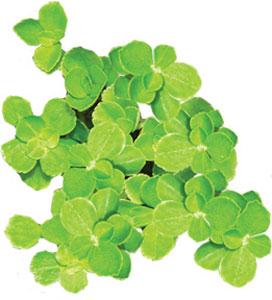
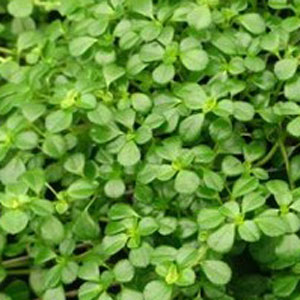
Product images shown online are intended to represent the mature, finished plant, including its expected color, growth habit, and overall appearance. They are not intended to depict the size or fullness of the starter plug at the time of shipment.
Tray Size
Sold in Liners of 100
Price Per Plug:
81.1 ¢
Total Per Tray:
$81.10
Partial Tray
Price Per Plug:
$1.00
Split Tray of 35 - Total:
$35.04
PBTThis item is available for immediate shipment North Carolina Farms, Inc.
Pilea are herbaceous perennials originally from Mexico and Brazil. Outside of zones 11 and 12 they can be grown as annual foliage, houseplants, or fairy gardens and terrariums. Their evergreen summer toughness makes them a good choice for garden centers to have on hand through the hot part of the year. Customers will enjoy them in small pots for desks or hanging baskets for porches after their flowering plants have succumbed to the heat.
General Growing Tips For Your Rooted Cutting Liner
For best results with Pilea, we recommend growing in a high-humidity environment using a constant feed program of 150-200 ppm N. Maintain a pH between 5.8 - 6.2.
To help your customers create a humid environment in their home, instruct them to place the pot on top of a saucer filled with rocks and pour water into the saucer, making sure that the water level never reaches the bottom of the pot.
Pinching
Pinchingis recommended 5-10 days after transplantation. A second pinch may be necessary depending on the size and shape of the final pot.
Spacing
Space pots adequately to allow for light penetration and airflow between foliage of adjacent pots. We recommend 6-8 inches for 4” pots and 18-24 inches for 10” pots.
Height Control
Pinching is the best way to control height. An initial pinch is recommended, but additional pinching may be necessary to shape your final product.
Pests
Mealybugs and spider mites are the primary pests attracted to Pilea.
Disease
Baby Tears are not prone to many diseases, but watch for botrytis while the days are short. This grey rot is usually associated with wet or humid conditions. You can prevent botrytis by allowing the plant to dry out between waterings, allowing for good airflow in your greenhouse, and spacing to allow the sun to penetrate to the soil level. The most common chemicals used to treat botrytis are Medallion and Banrot. Use them as a drench according to each label’s instructions.
Planting Baby Tears Liners
We recommend planting 4-5 starter plants per 10” basket. Use a well-drained soil in your baskets and plant your starter plants deep, allowing the ellepot to be completely covered by the soil. If you are planting 4” pots, 1 plant per pot should be sufficient if you have enough time. Plant it directly in the middle of your pot.
Pinchingis recommended 5-10 days after transplantation. A second pinch may be necessary depending on the size and shape of the final pot.
Rooted Cuttings
Cuttings vary in size between different plant families. These rooted starter plants will arrive ready to be transplanted in to your final container. If they are to be used in a landscape application, you will need to establish them in a 4 inch pot or an 1801 before planting outside.
Pilea Baby Tears Quick Reference Guide
4 Inch crop time
4-6 Weeks
10 Inch crop time
8-10 Weeks
Habit
Trailing
Height
6 inches
Light
Full Shade, Partial Shade
Minimum Temp
55
Perennial Zone
11-12
Water Needs
Moderate
Patented Plant
No
Current
Availability
Current Availability
10-19-2026 (Week 43)
135
10-26-2026 (Week 44)
0
11-02-2026 (Week 45)
0
11-09-2026 (Week 46)
0
11-16-2026 (Week 47)
0
11-23-2026 (Week 48)
8,100
11-30-2026 (Week 49)
8,100
12-07-2026 (Week 50)
8,000
12-14-2026 (Week 51)
8,100
12-21-2026 (Week 52)
7,300
12-28-2026 (Week 53)
8,100
01-04-2027 (Week 01)
8,100
01-11-2027 (Week 02)
6,900
01-18-2027 (Week 03)
8,100
01-25-2027 (Week 04)
8,100
02-01-2027 (Week 05)
8,100
02-08-2027 (Week 06)
7,200
02-15-2027 (Week 07)
8,100
02-22-2027 (Week 08)
7,900
03-01-2027 (Week 09)
8,000
03-08-2027 (Week 10)
8,000
03-15-2027 (Week 11)
8,000
03-22-2027 (Week 12)
8,100
03-29-2027 (Week 13)
8,000
04-05-2027 (Week 14)
8,100
04-12-2027 (Week 15)
8,000
04-19-2027 (Week 16)
7,400
04-26-2027 (Week 17)
8,100
05-03-2027 (Week 18)
8,100
05-10-2027 (Week 19)
8,100
05-17-2027 (Week 20)
8,100
05-24-2027 (Week 21)
6,600
05-31-2027 (Week 22)
8,100
06-07-2027 (Week 23)
8,100
06-14-2027 (Week 24)
8,100
06-21-2027 (Week 25)
7,500
06-28-2027 (Week 26)
8,100
07-05-2027 (Week 27)
8,100
07-12-2027 (Week 28)
8,100
Pilea are herbaceous perennials originally from Mexico and Brazil. Outside of zones 11 and 12 they can be grown as annual foliage, houseplants, or fairy gardens and terrariums. Their evergreen summer toughness makes them a good choice for garden centers to have on hand through the hot part of the year. Customers will enjoy them in small pots for desks or hanging baskets for porches after their flowering plants have succumbed to the heat.
General Growing Tips For Your Rooted Cutting Liner
For best results with Pilea, we recommend growing in a high-humidity environment using a constant feed program of 150-200 ppm N. Maintain a pH between 5.8 - 6.2.
To help your customers create a humid environment in their home, instruct them to place the pot on top of a saucer filled with rocks and pour water into the saucer, making sure that the water level never reaches the bottom of the pot.
Pinching
Pinchingis recommended 5-10 days after transplantation. A second pinch may be necessary depending on the size and shape of the final pot.
Spacing
Space pots adequately to allow for light penetration and airflow between foliage of adjacent pots. We recommend 6-8 inches for 4” pots and 18-24 inches for 10” pots.
Height Control
Pinching is the best way to control height. An initial pinch is recommended, but additional pinching may be necessary to shape your final product.
Pests
Mealybugs and spider mites are the primary pests attracted to Pilea.
Disease
Baby Tears are not prone to many diseases, but watch for botrytis while the days are short. This grey rot is usually associated with wet or humid conditions. You can prevent botrytis by allowing the plant to dry out between waterings, allowing for good airflow in your greenhouse, and spacing to allow the sun to penetrate to the soil level. The most common chemicals used to treat botrytis are Medallion and Banrot. Use them as a drench according to each label’s instructions.
Planting Baby Tears Liners
We recommend planting 4-5 starter plants per 10” basket. Use a well-drained soil in your baskets and plant your starter plants deep, allowing the ellepot to be completely covered by the soil. If you are planting 4” pots, 1 plant per pot should be sufficient if you have enough time. Plant it directly in the middle of your pot.
Pinchingis recommended 5-10 days after transplantation. A second pinch may be necessary depending on the size and shape of the final pot.
Rooted Cuttings
Cuttings vary in size between different plant families. These rooted starter plants will arrive ready to be transplanted in to your final container. If they are to be used in a landscape application, you will need to establish them in a 4 inch pot or an 1801 before planting outside.
Pilea Baby Tears Quick Reference Guide
4 Inch crop time
4-6 Weeks
10 Inch crop time
8-10 Weeks
Habit
Trailing
Height
6 inches
Light
Full Shade, Partial Shade
Minimum Temp
55
Perennial Zone
11-12
Water Needs
Moderate
Patented Plant
No
Edit Product
Catalog Request Form
Email Discounts and Coupons Form
Before we take this relationship any further...
It looks like this is the first time you've added anything to your cart.
We just wanted to remind you that we are a wholesale starter plant company that sells to businesses, schools, clubs, and other non-profits. State law dictates that you must be growing for resale to order from us since we are not collecting sales tax.
If we aren't a match, we understand. It's not you, it's us.
We would look awful in orange jumpsuits.
Product images shown online are intended to represent the mature, finished plant, including its expected color, growth habit, and overall appearance. They are not intended to depict the size or fullness of the starter plug at the time of shipment.